The History and Future of Retirement
By John Curry
Most people consider retirement a natural stage of life—inevitable, like childhood or middle age. It isn’t.
Retirement is a relatively recent social invention, created at a particular moment in history to solve a specific economic and social problem. And like all social inventions, it is constantly evolving.
In the summer of 1985, Ron Howard’s Cocoon became one of Hollywood’s most memorable fountain-of-youth stories. In the film, a group of retirees discovers a swimming pool infused with an alien life force and they emerge from it stronger, healthier, and younger. The premise was pure fantasy, but it tapped into one of humanity’s oldest aspirations: to be young again, even late in life.
Forty years later, Cocoon is back in the conversation as Hollywood considers a remake.
At the same time, the real world has begun exploring similar possibilities. Researchers recently launched the first human clinical trial of a therapy designed to reverse age-related vision loss by rejuvenating aging cells rather than treating disease. This trial reveals an important trend in scientific thinking.
Over the past few decades, researchers have moved their focus from extending life itself to extending the years people remain healthy and productive: from life span to health span. The shift raises an important question for individuals and for society at large. What happens to retirement if growing old no longer means decline or disengagement?
Life Before Retirement
For most of human history, retirement didn’t exist. People simply worked until they couldn’t.
Of course, there were exceptions to the rule. Roman soldiers received pensions after long military service. Medieval trade guilds sometimes cared for aging members. And religious orders offered lives removed from usual worldly labor. But few people had access to these arrangements. More often, families and communities stepped in to care for the elderly.
In agrarian societies, including the early U.S., multiple generations often lived and worked together. Economic security rested on four key pillars: personal wealth, the ability to work, family support, and, if all else failed, charity.
That arrangement began to break down when the Industrial Revolution swept across Europe in the eighteenth century. As work moved from farms, small towns, and households into large factories and growing cities, families dispersed and traditional support systems weakened.
The shift changed both where and how people worked. Before industrialization, many farmers and craftspeople controlled the pace, process, and products of their labor. Factory workers controlled much less. In his book, A Short History of Retirement, historian Steven Sass argues that industrialization transformed work from a way of life into a means to an end.
By the late 1800s, those changes had created a mounting problem in Europe. When age, illness, or injury forced people out of the workforce, neither families nor charities could meet the growing need. Old-age poverty became increasingly common and visible, and governments were pressured to respond.
A Particular Moment in History
From within this new world, German Chancellor Otto von Bismarck saw risk and opportunity. Concerned that rampant old-age poverty would lead to social unrest, in 1889, he introduced the world’s first national old-age pension system.
It wasn’t an act of charity or a declaration of universal rights. It was meant to preserve social order. Bismarck believed workers who had a financial stake in the existing system would be less likely to support revolutionary change.
Funded jointly by workers, employers, and the government, the pension itself was modest, and benefits didn’t begin until age 70, an age most people never reached. But it was well received by German citizens and created a model other nations could emulate. The concept spread quickly throughout Europe, then to European colonies around the globe.
The American Dream
The American version of a public pension—the Social Security Act, signed by Franklin Roosevelt—came to life half a century later, during the Great Depression. The program was designed to provide income for older Americans, but it also served another social and economic purpose: encouraging older workers to leave the workforce so younger people had a better chance of finding jobs.
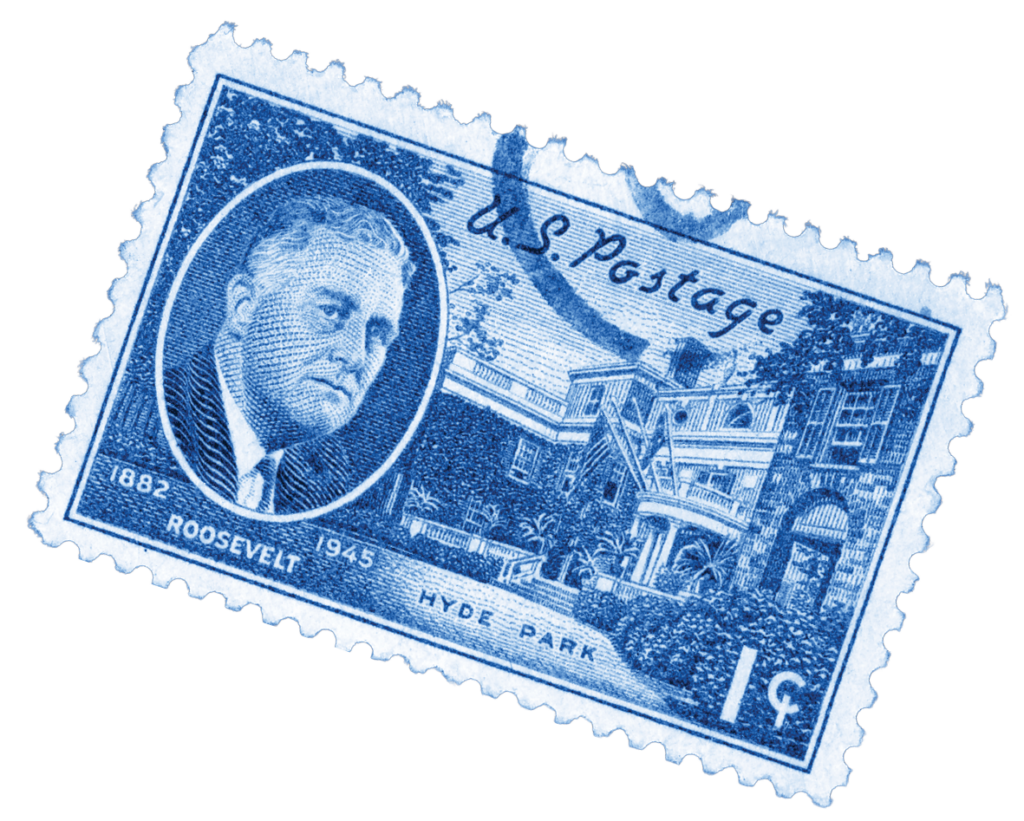
In 1935, when the Social Security Act became law, employer pensions were rare, and one in five Americans was unemployed. After World War II, things began to change. Strong unions, stable careers, and larger corporations helped make pensions part of an unspoken agreement. Workers promised their long-term loyalty to a single employer in exchange for the promise of a lifelong pension.
By the 1960s, pension plans had become a defining feature of middle-class retirement. Combined with Social Security, these plans gave many Americans a level of financial security that would have seemed out of reach just a few decades earlier. And as individual financial security improved, retirement became something to look forward to, rather than fear.
In the postwar boom, today’s familiar image of the American retiree emerged: a paid-off house, winters in warm places, time with grandchildren, travel, hobbies, and years of freedom after work.
Retirement communities helped make the image complete. In 1960, Sun City, Arizona—one of the nation’s first master-planned retirement communities—drew more than 100,000 visitors in its opening weekend and sold 1,300 homes.
But the retirement that many Americans came to view as normal was never guaranteed. It grew from an unusual mix of economic growth, generous pensions, rising home values, and favorable demographics. And as those factors evolved, so did the retirement picture.
Pensions to Portfolios
“For much of the twentieth century, retirement wasn’t something people had to invent for themselves,” says Scott Matheson, CAPTRUST managing director and head of client solutions. “The system did most of the heavy lifting. Social Security benefits, pension plans, and personal savings worked together in a way that gave the average worker a clear and predictable financial path.”
That promise began to unravel in the late 1970s as American businesses underwent a broader transformation.
Globalization intensified competition and made long-term labor costs harder to carry. New accounting rules forced companies to recognize pension obligations more clearly on their balance sheets, exposing promises that could stretch decades into the future. At the same time, workers grew increasingly mobile, making the old trade of lifelong loyalty for lifelong income less realistic.
For employers, 401(k)-style plans offered a more flexible alternative. They were easier to budget and transfer from job to job, and they shifted more investment and longevity risk from the company to the individual.
Enter the 401(k)
Created through a little-known provision in the Revenue Act of 1978, the 401(k) was never meant to replace the traditional pension. Instead, its intention was to create a way for employees to contribute their own money on a tax-advantaged basis.
Adoption, at first, was gradual. In the 1980s and 1990s, employers mostly offered 401(k)s alongside traditional pension plans, before phasing them out by freezing those pension plans or closing them off to new employees.
“The biggest change was the transfer of responsibility,” Matheson says. “Individuals suddenly had a much larger role in determining their own retirement outcomes.”
On a Threshold
Every version of retirement that has existed so far reflects the world that created it. Each one solved the defining challenges of its era until changing economic and social realities exposed its limits and weaknesses.
“The retirement system we inherited was built for a very different world,” Matheson says. “People are living longer now than ever. Careers are less linear, and the nature of work itself has changed.”
Also, the American population isn’t growing like it used to. There’s a much higher percentage of older people now, healthcare costs have increased exponentially, and the multigenerational household—one where younger people care for older family members in their own homes—is almost nonexistent.
“It’s natural that retirement would evolve again,” Matheson says. “It has always adapted to the world around it. There’s no reason to think this time will be different.”
History suggests that when the world changes, retirement changes too. So far, each reinvention has expanded what the retirement idea can offer. The earliest systems helped people survive without working. Bismarck’s pension plan improved financial security. Social Security dramatically reduced old-age poverty. The shift to 401(k)s gave people more control.
What’s Next
Throughout its life, retirement as a social invention has given millions of Americans something previous generations could scarcely imagine: the ability to stop working and still enjoy decades of financial independence, simultaneously.
The next chapter may focus less on income and more on choice. Longer, healthier lives could allow people to continue working because they enjoy it, pursue second or third careers, or move more fluidly between periods of work and periods of retirement. Instead of a clear dividing line between work and retirement, the future may bring a continuum of work, learning, and reinvention.
“For years, the central question was whether people could afford to retire,” Matheson says. “Increasingly, we’re also asking what retirement is for. That’s a very different conversation.”
Of course, not everyone will have those choices. “It’s important to remember that retirement remains a financial challenge for many Americans,” Matheson says. “For innovation to succeed, it must work both for people with choices and for people without them.”
Many people will continue to leave the workforce because of poor health, caregiving responsibilities, economic necessity, or labor market shifts. History suggests society will continue searching for ways to support them.
Most likely, the future of retirement is this: not one big shift but gradual and continuous changes, driven by millions of people rethinking how they want to live and work.
Six Retirement Experiments
Different countries have answered the retirement question in surprisingly different ways.
- Australia: Employers are required to contribute a portion of every worker’s pay into a personal investment account, creating a system called superannuation that combines features of both Social Security and 401(k)s.
- Chile: In 1981, Chile became the first nation to shift retirement saving primarily into individual investment accounts, a controversial experiment that influenced pension reforms around the world.
- Japan: Facing one of the world’s oldest populations, Japan supplements traditional pensions with Silver Human Resource Centers that connect retirees with paid, part-time work in their communities.
- The Netherlands: One of the world’s highest-ranked retirement systems combines a universal state pension with large, collectively managed workplace pension funds that pool risk across millions of workers.
- New Zealand: New Zealand pairs a universal public pension with KiwiSaver, a voluntary workplace savings program that automatically enrolls many workers but allows them to opt out.
- Singapore: The government’s Central Provident Fund requires workers and employers to save for retirement, health care, and even housing through a single, mandatory savings system.