Hot. Cold. Repeat.
By Bill Kerig
Unless you’re an elite athlete who’s spent a lifetime dunking various body parts into ice, a devotee of the wild-eyed Wim Hof, or a polar bear, you probably made up your mind about cold plunges years ago: hard pass on that chilly craze.
Even when that ultramarathoner from work started evangelizing the practice—liberally quoting Andrew Huberman, Joe Rogan, and Tim Ferris—it was easy to turn away. That person’s crazy.
But now, paired with a nice hot sauna (maybe even one with infrared rays), the possibility of building an elegant setup in your own back yard, and a sensible rebranding from cold plunge to contrast therapy, the practice has edged into mainstream wellness territory.
Maybe it’s time to take another look.
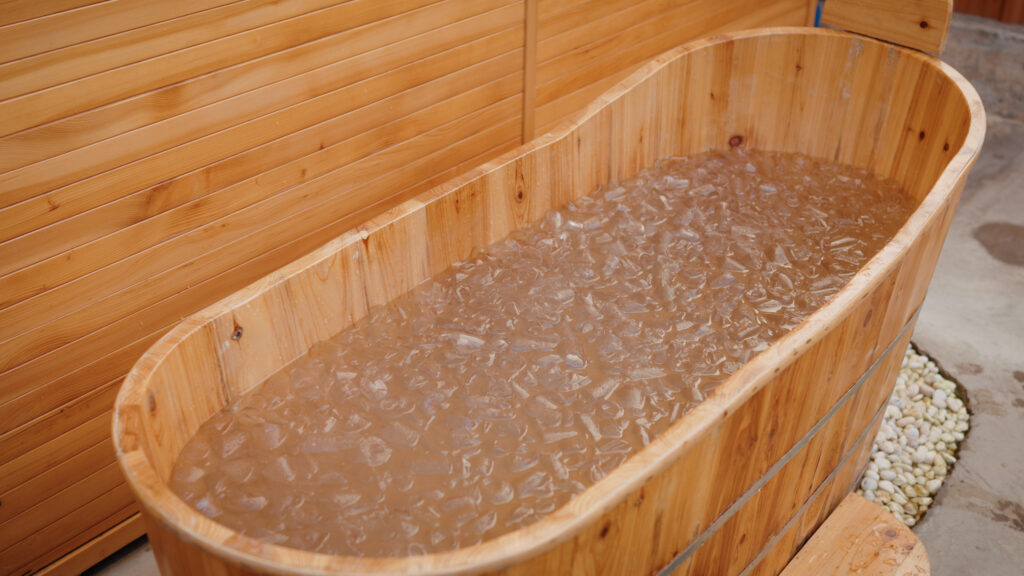
First, a quick primer on how it works. As you begin to sweat in the sauna, your blood vessels dilate, increasing blood flow and helping your muscles relax. Then, when you’re good and cooked, you hop into the cold tub. The sudden temperature change causes blood vessels in your extremities to constrict as your body redirects blood from your limbs into your core to protect your brain and vital organs.
This is why your hands and feet get cold first. Stay in the icy water long enough, and your nervous system will tell your muscles to contract and relax rapidly, which you’ll experience as shivering.
Recommendations for how long to stay in the cold plunge vary, based on your body type and experience. Frequent exposure does have a cumulative effect that makes it easier to stay in for longer. After the chill-down, you shiver your way back to the sauna and repeat the cycle as desired.
Why would anyone put themselves through this?
The Case for Contrast
Switching between the two extremes creates a pumping effect, which flushes blood and lymphatic fluid through tissues. This is said to clear metabolic waste and reduce inflammation.
The cold also triggers a norepinephrine release, boosting alertness and mood, while heat exposure can lower stress hormones. Together, contrast therapy is thought to support recovery, reduce soreness, and improve circulation.
Claims of improved immune function, enhanced metabolic health, greater mental acuity, and psychological resilience are frequent, but clinical data are still developing.
Detoxification and hormone optimization are mostly unsupported by current evidence, but there is no shortage of anecdotal evidence. Cold plungers tend toward zealotry.
I reserved judgment until one rainy day on Canada’s Vancouver Island.
The Spa That Changed My Mind
Rainforest Ucluelet Sauna Rental is a sort of a spa version of an Airbnb near the Canadian surf mecca of Tofino. My wife found it online and booked it via text, and we paid in cash on arrival.
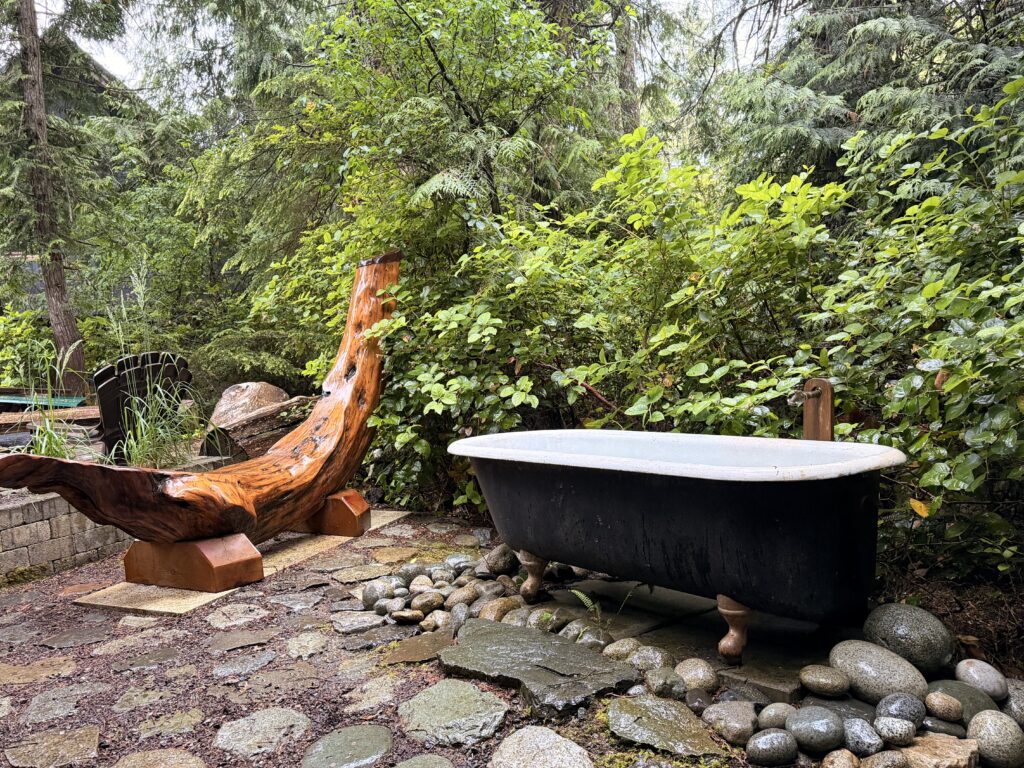
Proffering towels and a commentary on local rainforest growth, the young proprietor leads us through a curtain of giant ferns to an elevated patio of natural, hand-laid stone. On one side of the patio stands a clawfoot bathtub, into which a stream of frigid well water flows. On the other is a redwood sauna. Between the two is a hand-carved lounge chair with a distinctive Viking vibe.
I was feeling healthier already.
After showing us how to adjust the flue on the stove to modulate the heat, the host leaves us in private. Starting in the sauna, we cook for about ten minutes, and then take turns cooling off in the tub for three to five minutes per dunk. We do five rounds.
Parting the fern curtain, two hours later, I feel relaxed, but sharp. Endorphins flowing, I’m glowing, virtuous. OK, I’m sold. But how could I replicate the experience at home?
High Performers
My AI agent shows me Costco home saunas (ranging from about $2,000 to $9,000) and all manner of cold plunges (DIY versions starting at around $300, with high-end, installed versions going for north of $40,000).
But, before I know it, nearly every page I visit has a video from Sun Home Saunas. In it, the company’s young and energetic founders, Tyler Fish and Adam Fisher, recount meeting in Santa Barbara, bonding over fitness and wellness, and starting a business to make the best contrast-therapy installations in the world. If the video—which touts Sun Home Saunas as the number one, fastest-growing consumer-services company on the Inc. 5000 list—is to be believed, these guys are crushing it and having fun doing it.
We meet on Zoom, where I obviously have to start with the names. Fish in both? Pure coincidence. Then, we move on to the why and how.
“When we were doing our research, we found a few legacy companies in the infrared sauna space,” says Fish. “They’d been around since the 90s and hadn’t innovated. And it was a very tedious process to acquire one of these home saunas. Lead forms and salespeople and a visit to the dealer. Then, you get some ugly wooden box and stick it in the corner of your room and not show anyone. So, we launched Sun Home to be the best-looking, top-performing saunas, and we set out to remove a lot of the friction to buy for the modern home.”
Which is to say, they created Sun Homes Saunas as an e-commerce company with a slick website, 3D tours, a knowledgeable sales staff, and the ability to build and price your setup online.
“All right,” I say. “Let’s imagine that I’ve bought the $13,000 five-person sauna with infrared therapy and the $4,000 cold plunge. What happens next?”
“You’ll get a confirmation email outlining the details of your order as well as a choice of installation.”
The do-it-yourself option is supported by videos and a call-in helpline. There’s also a contractor service that will do it for you, for a fee. About half of Sun Home’s customers choose an all-inclusive white-glove assembly.
“And how would you characterize those customers?” I ask.
“Affluent, over 45, and whether they’re executives, athletes, or just people who want to improve their health and longevity, all our customers are high performers in their own realms.”
He didn’t say, “High performers like you,” but that’s how I heard it. It was all I could do not to click Order Now. No one leads a company to 600 percent annual growth without being a heck of a salesperson.
As for the future of contrast therapy, Fish has a positively Nordic vision.
“It’s going to be as popular as in Finland, where a sauna is as common as any other household appliance,” he says. “Not just for the health benefits, but also for community and bonding with family and friends.”
Which sounds sensible to me, but as I mentioned, he had me at “high performer.”
Contrary Opinion: Heat as Connection
Bill Gifford—the New York Times best-selling author of Hotwired: How the Hidden Power of Heat Makes Us Stronger—says he loves a nice, hot sauna but doesn’t have one at home. He prefers local establishments, so that’s where I meet him to ask why.
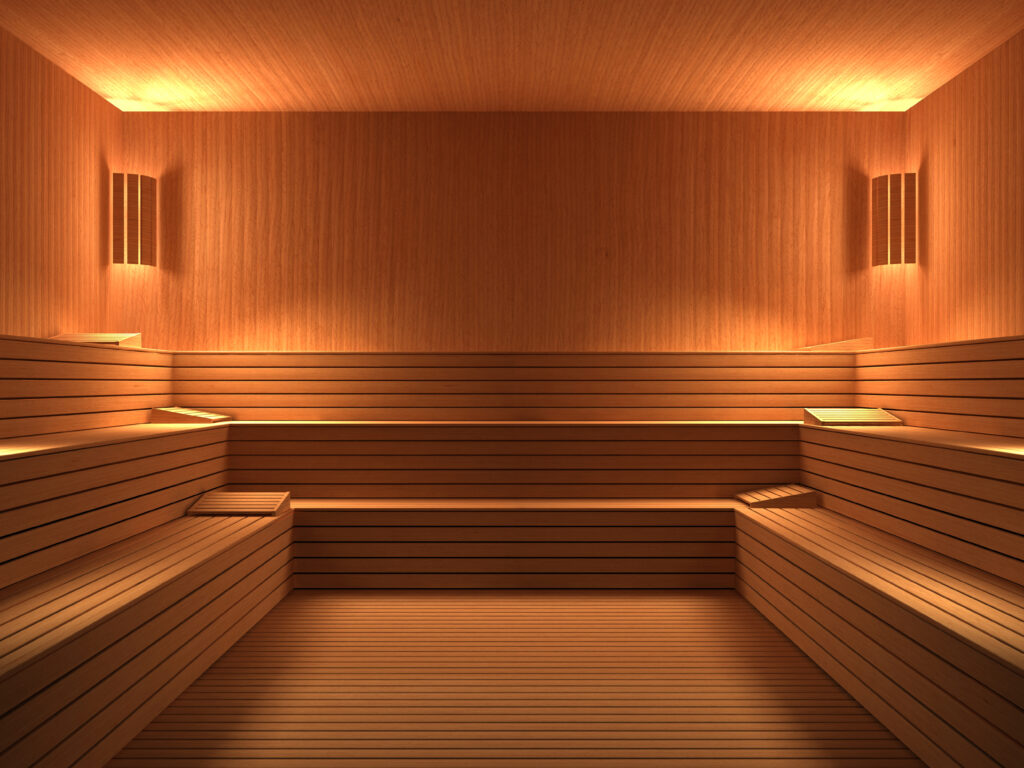
“Because there’s socialization in the sauna,” Gifford says as we step into the hot box at Sauna Public in Salt Lake City.
“Being in the heat can take away some inhibitions,” he tells me. “It’s like the local pub. There’s even a concept they call being sauna drunk. You just get loosey-goosey. Sometimes I think the sauna was just a prehistoric way of getting high. You’re calm, not overly stressed out, and more willing to talk.”
Now that he’s relaxed, this seems like the right time to ask my next question: In his research for the book, what surprised him most about how heat affects humans?
“One: An athlete can adapt to hot conditions and use it to improve performance, kind of like altitude training,” says Gifford. “Two: There appears to be a mental-health benefit to heat therapy. It’s been studied against severe depression, and it definitely has an elevating effect.”
OK, last question: We’ve been in and out of the sauna and cold plunge for an hour or so. On a scale of one to six beers, how sauna drunk are you?
“Maybe a beer and a half?” he answers. Yeah, I’d say that’s about where I am too. And I can still drive home.
Curious But Cautious?
Here’s how to get started.
1. Ease into the cold. For beginners, even 30-60 seconds of cold exposure can feel intense. Yes, discomfort is kind of the point, but more is not necessarily better. Take it easy on yourself.
2. Know the risks. People with cardiovascular disease, uncontrolled hypertension, circulation problems, or certain medical conditions should consult a physician before attempting extreme heat or cold exposure.
3. Stop if you feel unwell, or you just don’t love it. Dizziness, chest pain, significant shortness of breath, or feeling faint are signs to exit immediately and seek medical guidance. Also, if you try it a few times and don’t feel any positive benefits, remember that it’s OK to quit.
4. Think lifestyle, not longevity hack. Contrast therapy may be most useful as a relaxation, recovery, or wellness ritual. It’s definitely not a guaranteed path to a longer life, but it could make you feel a little better in the meantime.
First Timers Take Note
Want to try contrast therapy with minimal upfront commitment? Try one of the national chains below. These spots offer single visits, punch passes, and regular memberships.
- Life Time Fitness: This luxury fitness chain has recently added cold plunges at many of its clubs, alongside traditional sauna amenities.
- Remedy Place: Remedy Place blends luxury hospitality with wellness experiences, including guided
- ice baths and thermal therapies.
- Restore Hyper Wellness: One of the nation’s largest wellness franchises, Restore offers a range of recovery services in addition to saunas and cold plunges.
- Sauna House: Located mostly in the Southeast, Sauna House offers private and shared sauna spaces plus personalized advice on hot-and-cold cycles for people who are just getting started.
- SweatHouz: A fast-growing franchise built specifically around contrast therapy, SweatHouz offers private suites that combine infrared sauna and cold plunge experiences.