Vickie Liddell: The Starting Line
By Roxanne Bellamy
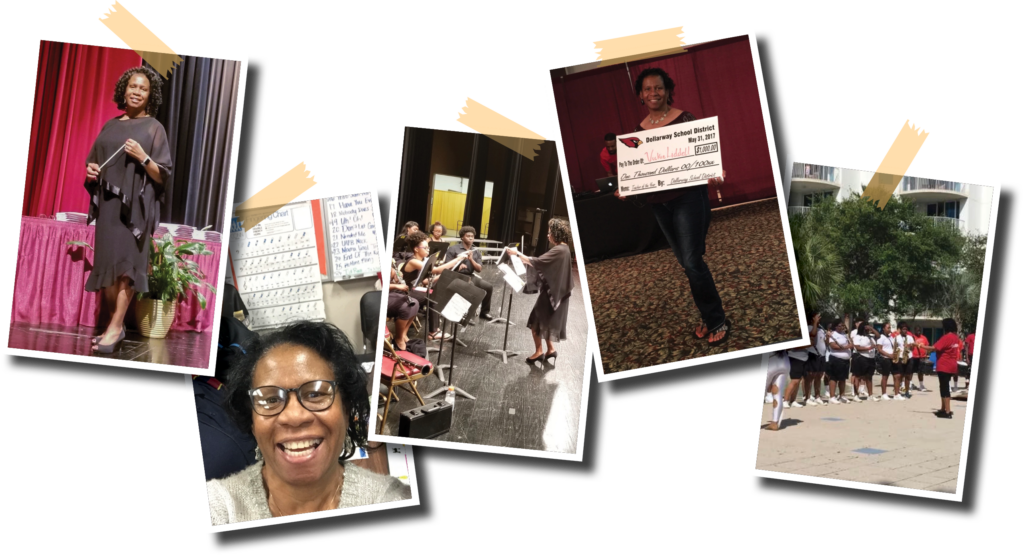
When Vickie Liddell first started running laps around the band room, she turned off the lights and shut the door so no one could see her.
This was before the medals, before the national competitions, before she became accustomed to hearing her name called at track meets.
At the time, Liddell was in her early 60s and nearing the end of a 22-year career as a band director. She was a mother of 10, a grandmother many times over, a church musician, and a teacher who had spent decades helping students understand discipline, rhythm, endurance, and the rewards of practice. But she was not yet an athlete—and she didn’t want anyone to see her trying to become one.
“I tried to keep it private,” she says now. “But I felt such an urge to move. Sometimes, when I was teaching, I’d find myself doing leg swings.” The impulse arrived before she understood where it might lead.
As retirement approached, Liddell says she knew she wanted to do something new and fun. “And it was like this desire just formed and grew up inside me to run track,” she says. “I had no idea I’d be competing. I was just going to run a little—just to do something after I left work.”
The Spark Before the Starting Line
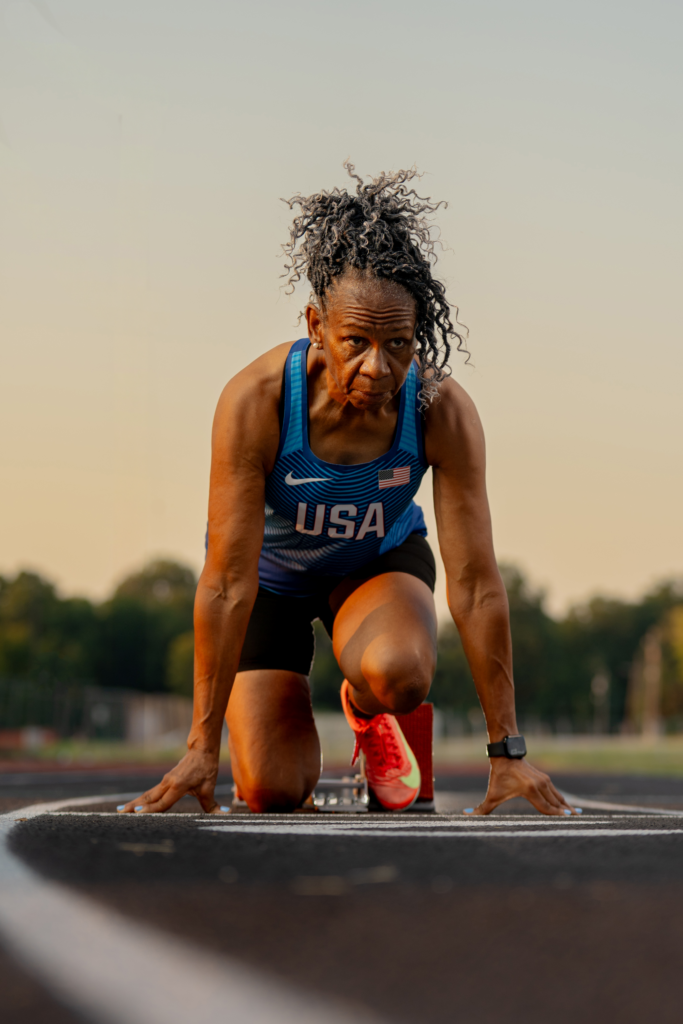
Looking back, Liddell describes it as a calling. She had enjoyed running as a child, and classmates later told her she had outrun boys in fifth and sixth grade, although she has no memory of it. Whatever spark existed decades earlier returned in a different form, and this time, she paid attention.
“I was overweight before I started running,” she says. “I felt like I needed to lose those pounds, but I didn’t know why.”
What followed was not a gentle introduction to a new hobby. It was a complete commitment. An overhauling.
At first, she trained four days a week, then dropped to three, alongside the youth athletes at her local Amateur Athletic Union (AAU) club. The children, she says, could “go on forever and a day,” but Liddell had not yet learned what her body could do.
“I had a lot of false assumptions,” she says. “I really did not know how hard track is. They make it look easy on TV, but I promise you, I have learned.”
The Hard Way
In one sense, track was entirely new to Liddell. Until 2019, she had never tried it, although some of her kids were track-and-field athletes while growing up.
In another sense, this new endeavor drew on many of the same skills and instincts she had practiced for most of her life. As a band director, she understood repetition, timing, endurance, physical effort, and the necessity of following instruction. Marching band, she says, is far more athletic than people realize.
“It’s a workout!” she says. “Marching band is physical, and you need to be in shape. I’d have the kids run laps as part of summer band camp, and when they were running, I’d be right out there with them.”
She laughs remembering the way she used to motivate her students while they ran. “I’d tell them, ‘If I beat you back to the band room, you have to do one more lap than me.’ And I beat several of them. The dance team girls? No, they beat me every time. The football players who were also in band? They beat me, too. But I could beat a few of the kids.”
Liddell once told a physical education coach that her marching band students deserved PE credit because of how much they moved. Tuba players and bass drummers carried heavy instruments. Marchers needed stamina. The whole ensemble had to learn to move together, breathe together, and respond to cues in real time.
This is one reason Liddell sees a natural bridge between her first act and her second. Track is not music, of course, but a good race has its own cadence. Her running coach, Louis Moss, noticed this too.
“Track is rhythmic,” Liddell says. “Sometimes, Coach Moss will say, ’Any of y’all ever been in the band? Ms. Liddell is a marching band teacher, and she’ll tell you that you’ve got to have good rhythm to run track.’ And you do. Plus, good coordination.”
The band room gave her a solid foundation, but the track demanded humility.
From Teacher to Student
Through years of teaching others, Liddell says she also learned how to be teachable herself, a lesson she considers one of the most important in this new chapter of her life.
She sees the difference in the young athletes she trains with. Some welcome correction, while others only half-follow instructions or resist advice. When that happens, the teacher in her comes out.
“I tell them, ‘You gotta be teachable,’” she says. “You gotta be coachable. You have to submit.”
Liddell knows because she’s had to do it herself. In the beginning, she says, she was “a horrible athlete.” Hurdles were especially humbling. These required Liddell to run and jump over a series of waist-high barriers while maintaining her speed and rhythm. When she started, she says, her stride was too short, and she knocked over the hurdles again and again. But eventually, those drills became some of her favorites—not because they got easier, but because they remained difficult and she improved anyway.
“I stuck with it,” she says. “And over time, I learned what my body could actually do.”
There was one early practice when she almost quit. The workout included six long sprints, with a short break between them. By the sixth sprint, Liddell had made up her mind: This would be her last track practice. She walked over to her coach, but before she could speak, he preempted and interrupted her thoughts.
“He stopped me where I was and said, ‘Ms. Liddell, you have to believe that you can do this,’” she says. “So I never got to tell him that I quit. And I stopped paying attention to the voice in my head. I started paying more attention to the voice in my heart that was saying ‘believe.’”
The moment stayed with her. Now eight years into her running era, Liddell says belief has made the biggest difference between the athlete she was at the beginning of retirement and the athlete she is today.
“It took me a while to get there,” she says. “But I’ve noticed, this year in particular, the track is not bigger than I am. It’s like I see myself as bigger.”

Injuries, Ignorance, and Resolve
Liddell’s progress came despite multiple setbacks, “many of them due to ignorance,” she says. At her first track meet, when she lined up to run, she felt a tightness in her hamstring but didn’t recognize the warning sign. Ten meters into the race, it tore. Hamstring injuries are notoriously painful and often require a lengthy recovery.
“It hurt something horrible,” Liddell says. “But I hobbled across the finish line and still had the nerve to think I could come back and run the 200-meter race later that day. That just shows how much I did not know.”
Other pains followed, including a knee injury that eventually required surgery. Yet even then, Liddell never considered walking away from track and field. In fact, while recovering from knee surgery—and after undergoing gallbladder surgery later that same year—she decided to add the long jump to her repertoire.
“The long jump was a surprise calling,” Liddell says. “But I was determined to try.”

In the long jump, athletes run and leap as far as possible from a single takeoff point into a shallow sand pit many feet long. It’s a test of speed but also strength and agility, all of which are difficult to maintain with age, as fast-twitch muscle fibers responsible for explosive movement decline even faster than their large, slow-twitch counterparts.
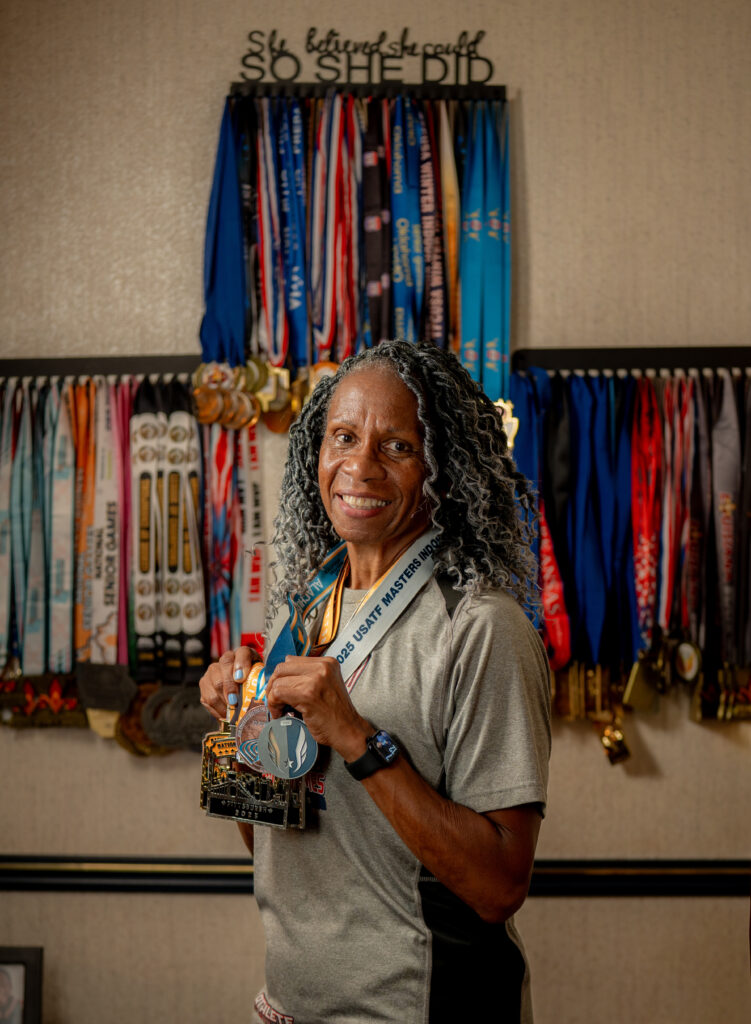
Liddell’s drive and determination paid off. She now holds multiple medals for the long jump, including a bronze from the 2025 World Masters Athletics Indoor Championships and a gold from the 2023 National Senior Games, where she jumped 11 feet and 9.25 inches.
“Quitting is not an option for me,” she says. “I believe you can do what you want to do if you practice it and you don’t settle for saying, ‘Oh I can’t do that.’ Don’t make excuses. At least give it a try, and give it an honest try.”
Proof of Practice
Liddell says that long-jump gold medal from the 2023 Senior Games is still her very favorite. The event was new to her, she had overcome numerous injuries to get there, and frankly, there are very few people over 65 who can say they’ve ever jumped 11 feet and 9.25 inches forward.
She also has a special fondness for the silver medal she earned in the 60-meter race at the 2021 USA Track and Field Indoor Nationals. Liddell completed the race in 9.7 seconds, an absolutely blistering time for any adult, particularly at age 65.
She still marvels at how much her life has expanded.
“Who would have thought I would be competing in national championships at this age, and with no experience as a runner?” she says.
At present, Liddell has earned 131 medals: 111 gold, 14 silver, and six bronze. The count is impressive, but it is not the point. If anything, the medals are evidence of something more enduring.
Liddell’s story is not just about discovering a talent later in life. It’s about commitment practiced daily.
She currently competes in the 400-meter, 200-meter, 100-meter, 50-meter races, as well as the long jump. During indoor track season, she also runs the 60-meter sprint.
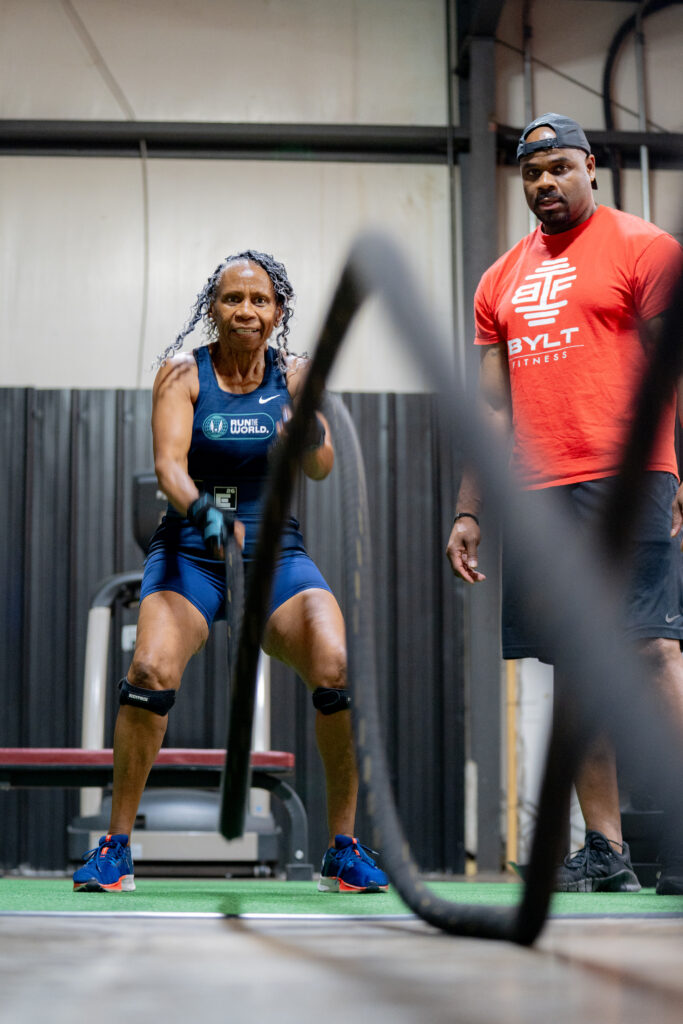
More recently, she added weight training to the list: another unexpected chapter in a life that continues to open and extend. She isn’t competing as a weightlifter yet, but she enjoys her time in the gym.
Family in the Stands
Her family has watched the transformation with pride and, at times, played a direct role in it. Liddell’s children live all around the country—Florida, Texas, Massachusetts, Tennessee, and Arkansas—and her grandchildren range from toddlers to young adults. She has 30 grandkids, plus another on the way.
She says her family has always been large and lively, and the lessons she taught her children about endurance, commitment, and seeing things through are now being reflected back to her.
“I always told them, ‘Never say can’t,’” she says. “My husband and I didn’t make them start things, but once they started something, they had to finish it.”
She tells a story about one of her daughters, Leticia, who wanted to quit the oboe because it was so hard to learn. Liddell and her husband, James, who passed away in 2010, would not allow it. Eventually, their daughter became skilled enough to earn a college scholarship.
To Liddell, track works the same way. Difficulty is not a sign that you should stop. More often, it’s proof that you are learning. Everything is difficult before it becomes easy.
In earlier years, Liddell was the sports mom with the cooler, the snacks, the ointment, and the cheerful voice yelling from the sideline. “Yes, yes, that was me,” she says. “Cheering and yelling and saying, ‘You got it, you got this!’” Now, her children cheer for her.
One of her favorite memories came at the 2022 Senior Games in Fort Lauderdale, Florida, when her daughter, Jelicia, provided play-by-play updates for family members who couldn’t attend. After Liddell advanced to another final, Jelicia told the family, “She just made another one!”
“That has stuck in my head,” Liddell says, “Her cheering for me. And that big smile on her face.”
Another daughter, Velicia, traveled with her mom to the 2025 Senior Games in Des Moines, Iowa, and stayed for the whole week. Toward the end of Liddell’s 400-meter race, she was running in lane eight, her times were not where she wanted them, and two runners passed her as she approached the final turn.
In her mind, she had already decided it would be the last time she ever ran the 400. Then she heard her daughter’s voice from the bleachers. “Mama, don’t quit,” Velicia yelled. “Show them what you got, Mama! Don’t quit!”
Liddell kept going and made the finals.
“I give her full credit for that,” Liddell says. “If Velicia hadn’t pushed me, I probably would have relaxed and given up. But when she said, ‘Mama, don’t quit,’ I just went for it. I heard her words, and I knew she could tell what I was thinking.”
Liddell says running has changed the way her family sees her. They already knew her as strong, determined, devoted to faith, and present for them. But this revealed a different side of their mother.
“They saw me as this cheerleader mom,” she says. “Now they can see how tough I am too.”
Once, when she was feeling discouraged, Liddell told her son, Joshua, she did not want to disappoint the family. His response became one of the greatest compliments she has received. “He said, ‘Mama, you will never disappoint us. We all know you’re fast,’” she says. The memory still makes her smile.
Running on Faith

Faith is central to how Liddell understands her life, and she does not separate her spirituality from her athletic achievements. When asked how faith fits into track and field, she answers without hesitation: “It is the reason I’m running.”
She remembers a moment before she started training with her coach, when she ran a 400-meter sprint simply because she could. In that moment, she says, she heard a question and an answer that have stayed with her ever since.
“I heard God ask me, ‘Why did you do the 400?’” she says. “And I thought, Because I could. But He said, ‘You did it because you believed you could do it.’”
“So, when my coach said, ‘Ms. Liddell, you’ve got to believe you can do this,’ it was like, uh-oh, alright, I hear you, God,” she says. “That was the confirmation: Coach Moss giving me the same words.”
For Liddell, track is filled with spiritual metaphors: commitment, faith, and discipline; staying in your lane; focusing on your own calling instead of comparing yourself to others; and eventually passing the baton to the next generation. She prays before races and points upward in thanks afterward.
“When you see me pointing up, I’m giving glory,” she says. “I’m saying, ‘God, you’re the reason. This one is for you. Whether it’s first, second, fourth, or 10th, this one’s for you.’”
Friendly Competition
That conviction helps Liddell stay committed on difficult days. It also shapes how she views competition. She is serious about wanting to win, but the track community, especially at the masters level, has taught her that competition and friendship can coexist.
“We are friendly competitors,” she says. “We’re nice to each other. We’re genuinely encouraging. But in our heads, we’re thinking, ‘I’m still going to beat you.’ I just want my best to be better than their best.’”
When the races are over, she says, competitors take pictures, go out to eat, and share stories.
That balance, both fierce and generous at once, seems to suit Liddell. She wants to improve, but she also wants others to see what is possible in their own lives.
In retirement, she has become an example not only to her friends and family but also to the people who see her training and competing. She shows them that aging does not have to mean decline or withdrawal.
“My own friends and family have said to me, ‘I see now that when you get old, you don’t have to stop. You don’t have to just sit in a chair and wait to die,’” she says. “That’s when I realized I wasn’t doing this just for myself. I thought I got into this just because it was something I enjoyed. But after listening to those stories and others, I started thinking, this is for people to see that life isn’t over just because you’re old. You can do what you want to do.”
If there is a main lesson in Liddell’s second act, it may be this: Beginning is often more important than knowing where the path will lead.
She did not wait until she understood every challenge ahead. She did not wait until she felt confident. She started in the dark, alone in the band room, privately and imperfectly, trusting that the next step would reveal itself someday.
When I asked what she would tell someone who feels a spark and wants to try something completely new, she did not pause before answering.
“Don’t hesitate! Just act on it!” she says. “Don’t give it an opportunity to leave you. Act on it when it’s there, whatever it is. Do it immediately.”
Now, at 70, Liddell is still curious about what might come next. She considered the pole vault, but quickly “erased it” from her options. Hurdles, however, remain a possibility. She once dreaded them. Now she thinks they might be fun.
She is listening, as she puts it, “for the next thing to drop into my spirit.”
That openness is part of the way she keeps her life so full. Liddell has not stopped being a teacher, a musician, a mother, a grandmother, or a woman of faith. She has simply found another place to express those parts of herself, another ensemble to join, another rhythm to learn.
And on the days when it’s hardest, when her body complains or doubt tries to creep back into her mind, she knows exactly what to do:
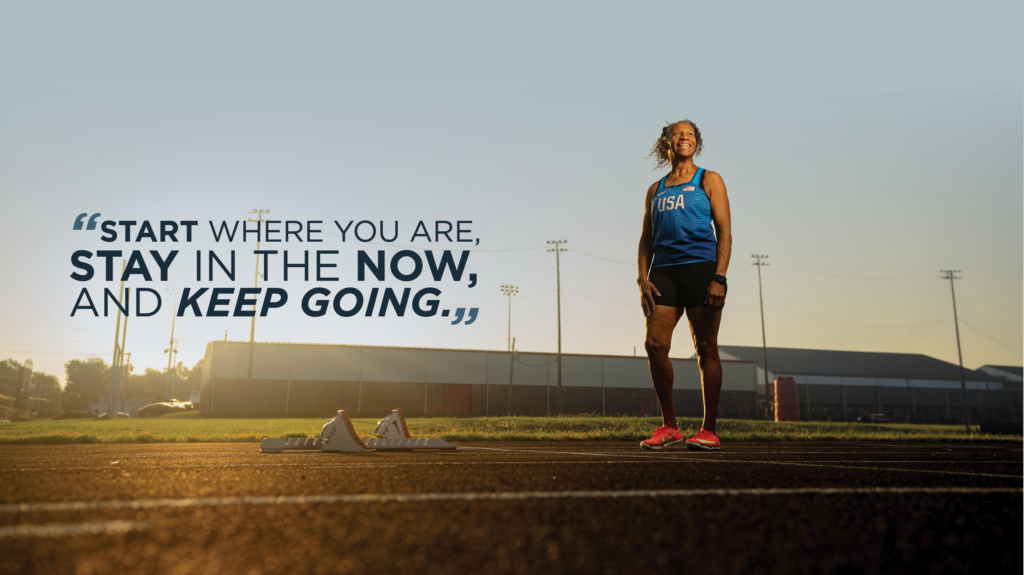
“Start where you are, stay in the now, and keep going.”
Editor’s Note: While we were writing this article, Liddell achieved a new personal best in the long jump at the Arkansas Senior Games, jumping 12 feet and 4 inches.