Wonder All Around
By Roxanne Bellamy
In 2022, Neal Kelso was visiting Longwood Gardens in Kennett Square, Pennsylvania, when he paused beside a chestnut tree. Among the tree’s spiny green burrs, he noticed an unusual insect with a long, curved snout (Yes, it’s the same insect enlarged on this page.) It wasn’t especially colorful or charismatic. Most people would have walked right past it. Instead, he took a photo with his phone.
Kelso uploaded the image to iNaturalist, a free app used by nature enthusiasts, scientists, and curious observers around the world. That small act of observation led to something much larger.
Researchers who saw the photograph thought the insect appeared to be a greater chestnut weevil, a species long believed to have been extinct. The weevil depends on chestnut trees, and when a devastating blight swept through American chestnut forests in the early twentieth century, billions of trees were lost. The insect seemed to have vanished along with them.
Yet, here it was.
Additional investigation eventually confirmed what the image had suggested: The greater chestnut weevil was still alive. Hidden in plain sight, it had been quietly hanging on while the rest of us assumed it was gone.
It’s tempting to think this is a story about a rediscovered insect. But really, it’s about paying attention. Kelso wasn’t conducting a formal study. He wasn’t searching for a rare species. He simply noticed something interesting and took the time to ask: What is that?
His small act of curiosity helped rewrite a scientific story many thought had already reached its conclusion.
Curiosity Becomes Data
We tend to imagine scientific breakthroughs happening in laboratories, not during a casual walk through a public garden. But, increasingly, ordinary people with smartphones, notebooks, binoculars, backyard birdfeeders, and a willingness to look closely are helping expand scientific knowledge.
Across the world, millions of volunteers are monitoring bird migrations, identifying invasive species, tracking biodiversity, documenting changes to ecosystems, and, occasionally, helping discover new species. Some contribute while hiking through national parks. Others participate from cruise ships in Antarctica. Many never leave their own backyards.
The practice is known as citizen science—or, increasingly, participatory science. It rests on a simple idea: Scientists can’t be everywhere, but the public can.
Over time, small observations become vast datasets that help researchers understand the natural world at a scale they could not achieve alone. Along the way, participants often gain something meaningful themselves: a deeper connection to the places where they live, the creatures they live alongside, and the larger systems that sustain us all together.
The World Comes Into Focus
Nature has a curious way of hiding in plain sight, just like the greater chestnut weevil.
Most of us move quickly through our days, focused on appointments, responsibilities, and screens. We notice weather when it interrupts our plans. We notice birds when they get too close. The rest of the time, the living world often hums quietly in the background.
Then something changes.
You download an app. You identify a bird song. You photograph an unfamiliar flower. You begin paying attention.
“Once you start noticing nature, you can’t stop,” says Arya Natarajan, senior communications manager at iNaturalist. “People start using iNaturalist, and then find themselves surprised at how many species
of plants and animals and insects are around them.”
Natarajan herself lives in downtown Los Angeles and says she has documented 15 to 20 different species of animals and insects right outside her door. And her experience is remarkably common.
A weed pushing through a crack in the sidewalk suddenly has a name. The sparrow in the backyard turns out not to be a sparrow at all. The tree you’ve passed every day for years flowers at a particular time, hosts a specific caterpillar, and produces fruit favored by certain birds.
The world doesn’t become more alive. It was alive all along. Participatory science simply gives people a reason to look again.
For many participants, this shift in awareness becomes one of the greatest rewards. The scientific contribution matters, but so do the moments of wonder that happen along the way.
David Bonter, co-director of the Center for Engagement in Science and Nature at Cornell University, has spent 25 years working with citizen-science projects. What he hopes participants gain isn’t just scientific knowledge.
“I hope they take away an appreciation of life around them,” he says. “For a lot of the last century, we’ve been separating people from the natural world, and technology has played a big role in that. Now, we’re at a point where it can help us connect back to nature. That’s pretty darn exciting.”
A Thousand Eyes
For many scientists, the challenge isn’t a lack of questions; it’s a lack of coverage.
A biologist studying migratory birds cannot simultaneously observe every backyard bird feeder. A botanist cannot inspect every roadside ditch for invasive plants. A conservation researcher cannot monitor every coastline, forest, grassland, wetland, and mountain range. But collectively, volunteers can cover far more ground.
Today, more than 7,000 peer-reviewed scientific papers have used iNaturalist observations in their research. According to Natarajan, the platform has helped accelerate biodiversity research by allowing scientists to gather information at a speed and scale that would otherwise be impossible.
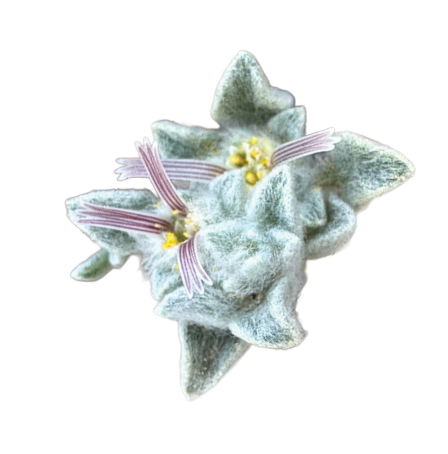
Sometimes, the results are extraordinary. In Big Bend National Park, a volunteer photographed an unfamiliar plant growing among rocky outcrops. After experts examined the observation, they determined it was an entirely new species in the sunflower and daisy family. Today, it’s known as the woolly devil.
Other contributions are less dramatic but equally important. Citizen scientists help track species shifting their ranges in response to climate change. Their observations can provide early warning signs when invasive species appear in new regions. By documenting where and when plants and animals are found, they help researchers identify patterns no individual could detect alone.
“When we can track a species, we can figure out how to engage,” Natarajan says. “If there’s a certain species of crab moving north because of climate change, we can predict their movements and be ready to designate new protected areas for them.”
What makes this possible is scale. One observation may not seem significant on its own. But thousands of observations, shared over time, can reveal movement, decline, recovery, and change.
“There’s this cycle of noticing,” says Natarajan. “Once people start to notice, if they document and share it, somebody somewhere can look at their observation within a greater constellation of recorded observations. From there, they can see patterns an individual wouldn’t be able to see.”
The Joy of It
Retirement often brings something many people haven’t had in decades: ample, unstructured discretionary time. Some use it to travel. Others volunteer, take classes, learn instruments, or return to hobbies long postponed by careers and family obligations.
Citizen science occupies an interesting space among those activities because it combines recreation, learning, and contribution. And it gives us a way to nurture curiosity.
It also challenges the idea that learning belongs primarily to children or students. Many adults find that curiosity becomes richer with age, when there is more time to ask questions just for the pleasure of asking them.
“We should be getting outside and asking ourselves about the world around us,” says Bonter. “Why is that bird doing that thing, and what seed is it they’re eating?”
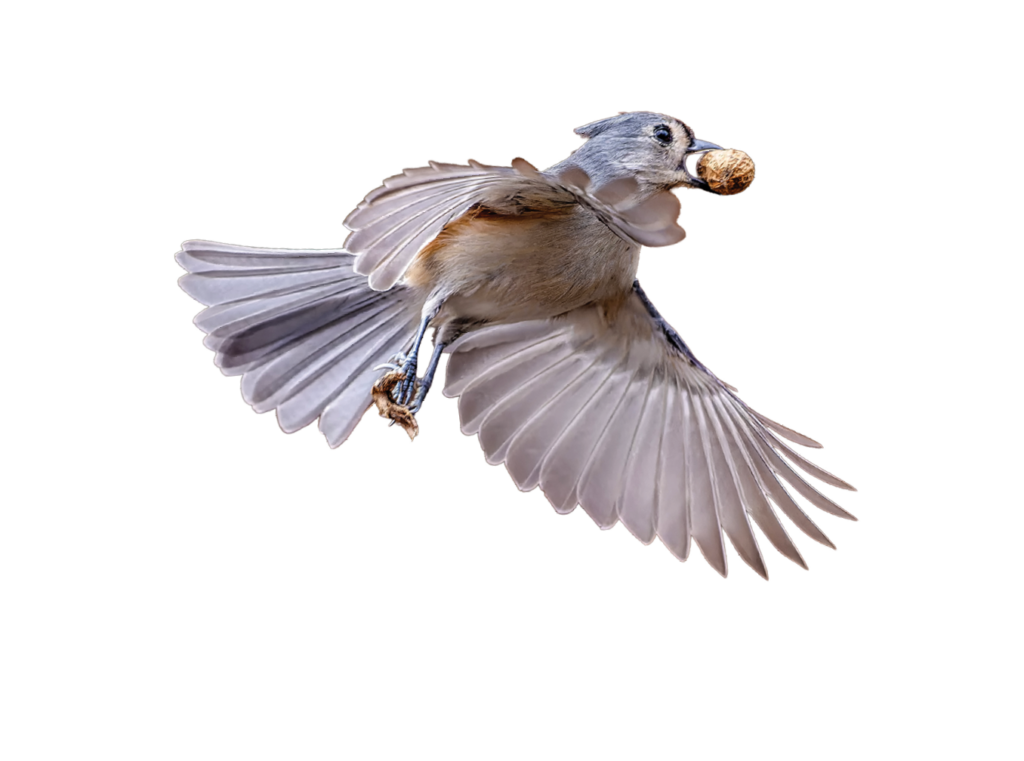
There is freedom in learning for its own sake, in following a question to see where it leads, in standing beside a bird feeder or walking through a neighborhood park and realizing there is still so much left to learn.
Bonter points to a growing body of evidence that shows the benefits of connecting with nature. For instance, the 2018 PLOS ONE study reviewed 50 separate scientific reports and showed the amount of local green space was positively linked to greater overall life satisfaction. Participatory science builds on that relationship by encouraging active engagement rather than passive observation.
The difference may seem subtle, but it changes the experience entirely. You stop merely being in a place; you become a part of it.
Travel With a Purpose
For travelers, participatory science can offer a more immersive way to experience a destination. It gives people a role beyond sightseeing and can turn a trip into an opportunity to contribute to conservation research.
According to Sarah Faith, senior values writer at the UK-based Responsible Travel, conservation research often depends on large amounts of field data gathered across vast geographic areas. Citizen scientists can help with that research by participating in science-focused expedition travel.
“What’s brilliant about using an expedition cruise somewhere like the Arctic or the Antarctic as a research tool is that your holiday gives scientists access to thousands of hours of extra research often in remote places they couldn’t otherwise access themselves,” says Faith.
Participation is often simple. Travelers may photograph whales for identification databases, document wildlife sightings, or record observations through research apps. Those observations can ultimately support conservation efforts and environmental decision-making on a larger scale.
Faith says these experiences can be especially appealing for retirees and older travelers because they combine adventure, education, and purpose.
“You’re making a genuine contribution to conservation without compromising the enjoyment of your holiday,” she says. “The
science is usually woven in through simple activities along the way that enrich what you’re already seeing and doing.”
For those who enjoy travel, science-focused trips can create a deeper connection to a destination. Travelers are not only seeing a landscape. They are helping document the animals, plants, and ecosystems that shape it.
“It’s a very rewarding way to travel,” says Faith.
The Record We Leave Behind
Truthfully though, most people will never rediscover a species, publish a scientific paper, or have a plant named in their honor.
That’s not really the point.
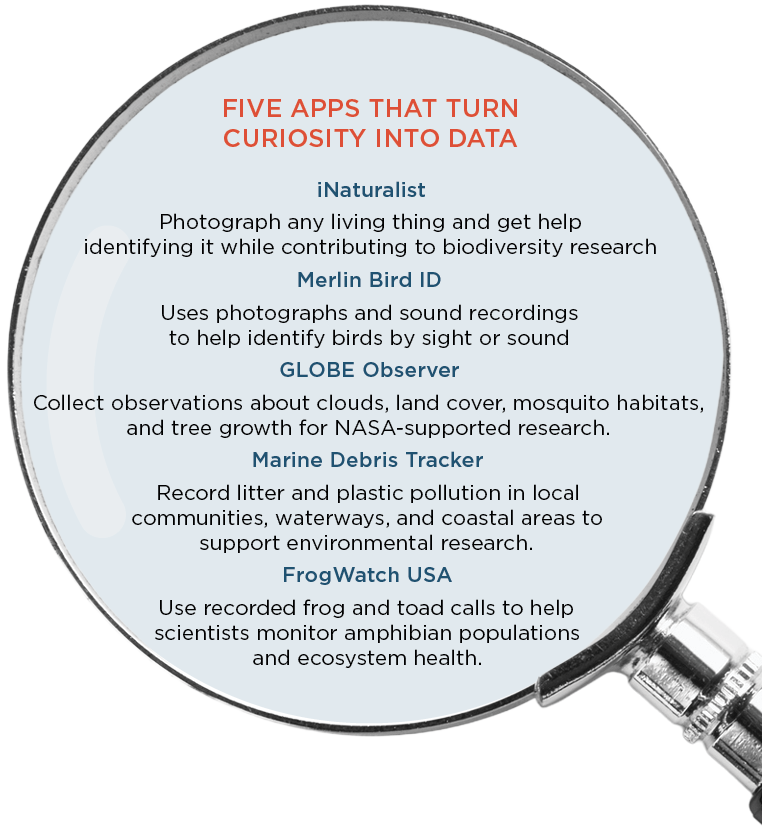
The power of participatory science lies in its collective nature. Individual observations become part of a shared record with
millions of contributions assembled over years and decades into something far larger than any one participant could create alone.
Bonter says first-time contributors often worry they’ll make mistakes or submit the wrong information. Starting anything
new can be intimidating, especially for people who don’t think of themselves as scientific.
“Just don’t let it stop you,” he says. “Mistakes are part of the process.”
Besides, he adds, “Anybody can contribute, and as much or as little as they want.”
Somewhere, perhaps, the next overlooked species is waiting for someone to pause long enough to see it.
Citizen Science Beyond Nature
Not all citizen-science projects focus on plants and wildlife. Many only require a computer and a few spare minutes. Other opportunities include:
- Classifying galaxies through astronomy projects with Galaxy Zoo or Planet Hunters TESS
- Transcribing historical documents and archives with Zooniverse or Notes from Nature
- Monitoring local weather conditions with CoCoRaHS or mPING
- Mapping communities and public spaces with SciStarter
- Contributing to public-health and environmental studies with AirCasting or Our Voice